
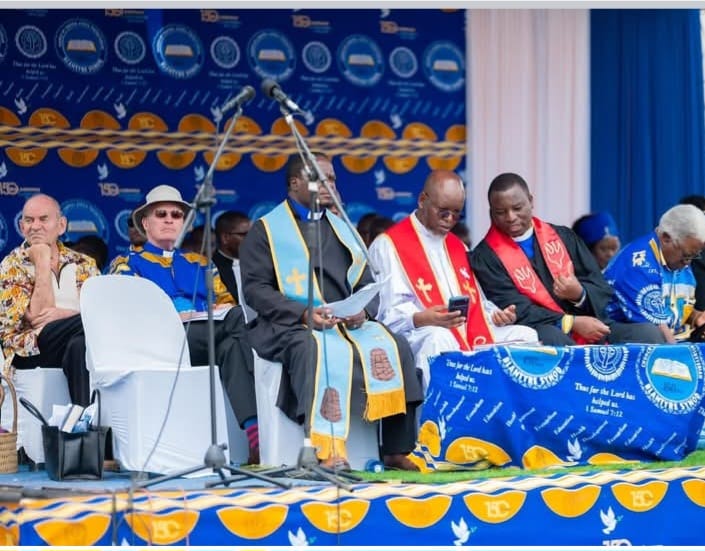
Watching the phenomenal singing and dancing with which the Blantyre Synod of the Church of Central Africa Presbyterian saluted its 150th anniversary over this past weekend, I could not help reflecting on the long-running question about whether such a church could become truly African.
For a long time in Africa, Christianity felt foreign, even to many of those who espoused it. Not now. Among the thousands who gathered to celebrate the sesquicentenary I doubt if there was anyone who would even think of this question. The Synod so obviously has an African character that nobody now imagines that it could be anything else. In the words of the great Kenyan Presbyterian, John Gatu, it has discovered how to be “truly African and joyfully Christian.” There was abundant evidence of this over the past weekend.
First and foremost this can be attributed to the commitment of generations of African Christians who have formed their own path of discipleship. Some credit can also go to the early Scottish missionaries who took an important cue from David Livingstone – the missionary who inspired the Blantyre Mission.
Through his long years in Africa, Livingstone came to realise that for Christianity to flourish in Africa it would need to be built on the life and culture of the African people. The missionaries who came to Blantyre under his inspiration were passionate about learning the local languages and discovering the riches of the indigenous culture. Quickly they became aware that they were in Africa to learn as well as to teach. Duff MacDonald, the first minister to serve with the Mission, used to declare, “When you come to Africa, you go to school again.”
So there was a lively exchange between the two cultures that met in the life of Blantyre Mission. Together Malawians and Scots forged a creative synthesis of Scottish Presbyterianism and African identity and heritage. The million people who worship in Blantyre Synod churches today are testament to how compelling this synthesis has proved to be.

