
Nestled in the foothills of the majestic Zomba Mountain, ZTU has high ambitions. Responding to Malawi’s rapidly growing demand for postgraduate studies in theology, it enrolled its first Masters students in 2022. Their numbers have now swollen to 52, with new programmes in the pipeline that are expected to further increase enrolment from 2025. These programmes are designed to equip future leaders of both church and nation, aiming to optimize Malawi’s exceptional human capital to meet the highly challenging times that lie ahead.
Until now, the new postgraduate programmes have been accommodated by squeezing into corners of a facility that is fully occupied by the longstanding undergraduate programmes. Hence the vision to develop a Centre that can be custom-built to support postgraduate studies. By imaginatively repurposing some underused buildings, ZTU plans to create a facility that will allow postgraduate students to thrive. Besides digitally equipped classrooms and study facilities, it will provide accommodation for those who come from around the country for periodic intensive sessions. The vision is that the new Centre will become a hub of collegiality, creativity and collaboration that can generate transforming ideas and transformative leaders.
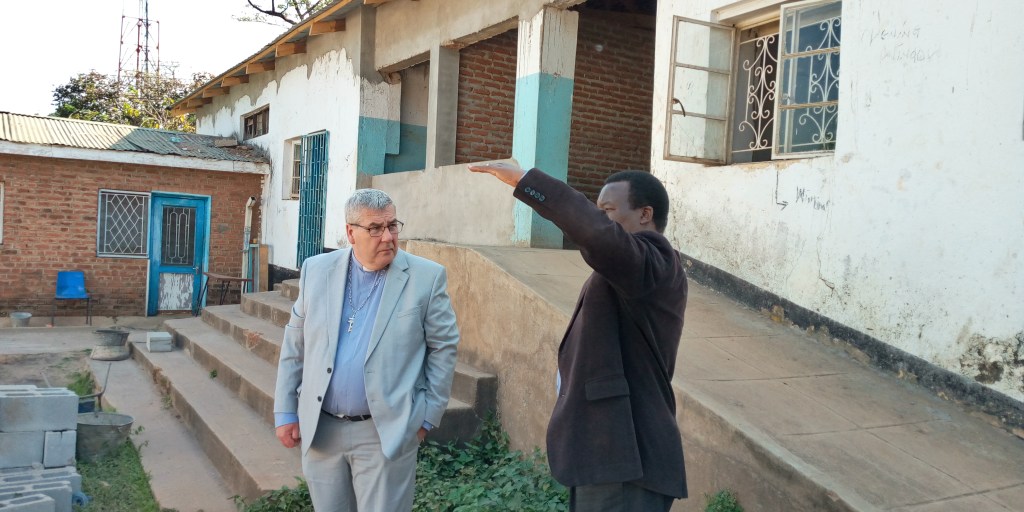
ZTU was recently pleased to welcome the visiting Moderator of the Church of Scotland General Assembly, the Rt Rev Dr Shaw Paterson, who was able to assess the progress of the building work at the new Centre. This was more than a casual glance since Dr Paterson has a background in the building industry and could cast a critical eye at the building techniques being employed. Better still, his theme for the year as Moderator is “building together” so bricks and mortar at ZTU chime with his concerns. We are grateful that the Church of Scotland, together with other international partners, is contributing in various ways to the creation of the new Centre.
A phased approach to the building means that we hope to have the teaching area in use during next year, 2025. This will already transform the situation of the postgraduate students, though they will be hoping it is not long before they can enjoy their cafeteria and bedroom accommodation.
 Thinking Mission Blog