
This is harvest season in Malawi, usually a time of joy and hope even in a year like this when the rains were not as steady as is needed for a bumper maize crop. This year, however, the joy of the harvest is mingled with fear. Many farmers are afraid of thieves after incidents where people have lost large amounts of their produce to theft.
This would have been unheard of in traditional Malawi, but it is becoming a reality today as people face food scarcity and contemplate desperate measures. Many of the victims of theft barely have enough to survive so they too are desperate, with some resorting to spending the night beside their crops and keeping watch.
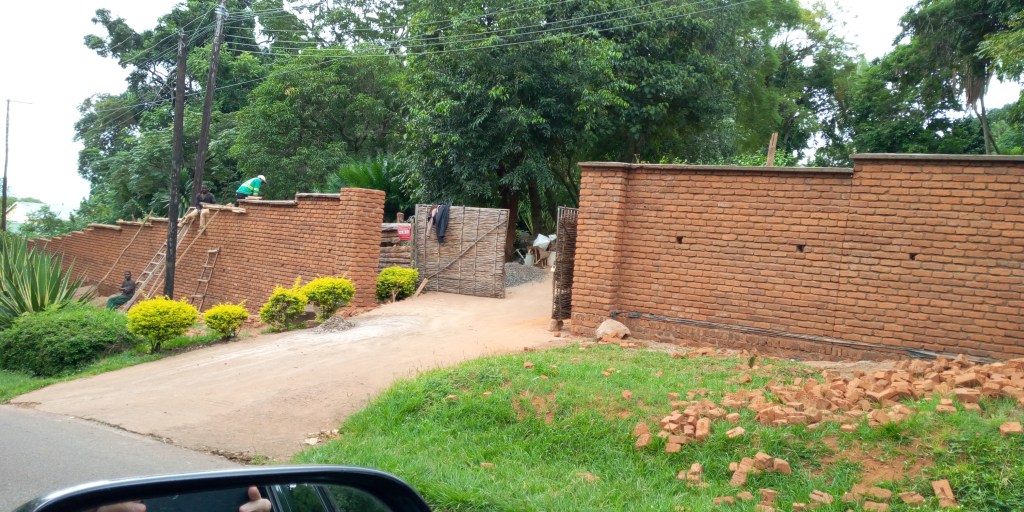
Meanwhile one of the few industries that is flourishing in Malawi is the building of security walls. More and more of the elegant colonial-era Zomba bungalows that I have been admiring for many years are disappearing behind high brick walls, often topped with broken glass or coils of barbed wire. Once again, fear is doing its work.
Those with property and possessions increasingly feel the need to protect themselves. The result is a society ever more sharply divided between the relatively wealthy behind their protective walls and the increasingly deprived for whom life becomes a desperate struggle for survival.
Sad to say, Malawi is mirroring the global situation where the 1% accumulate more and more resources at the expense of the poor and vulnerable. The anti-immigration policies of Western countries are another form of the walls and barbed wire that are disfiguring Zomba’s urban architecture.
Whether globally or locally, we are being sucked into a system that offers ever more rewards to a prosperous elite while shutting out the deprived and vulnerable. It does not take a prophet to tell us that this direction does not bode well for the future. Do we need John Donne to remind us that no-one is an island?
 Thinking Mission Blog