
Having been round the block a few times in the relationship between Malawi and Scotland, one thing I have discovered is that it is never very long until the next anniversary of David Livingstone. We remember his birth, his death, his arrival in Africa, his arrival in Malawi. In the end almost every other year is a Livingstone year!
The other thing I have discovered is that Malawians never tire of celebrating David Livingstone. Even in Scotland, the great explorer has somehow transcended the oblivion or disfavour to which most other missionaries have been consigned. This year it is the 150th anniversary of Livingstone’s death, at Chitambo’s village in Zambia. Such a milestone must be marked!
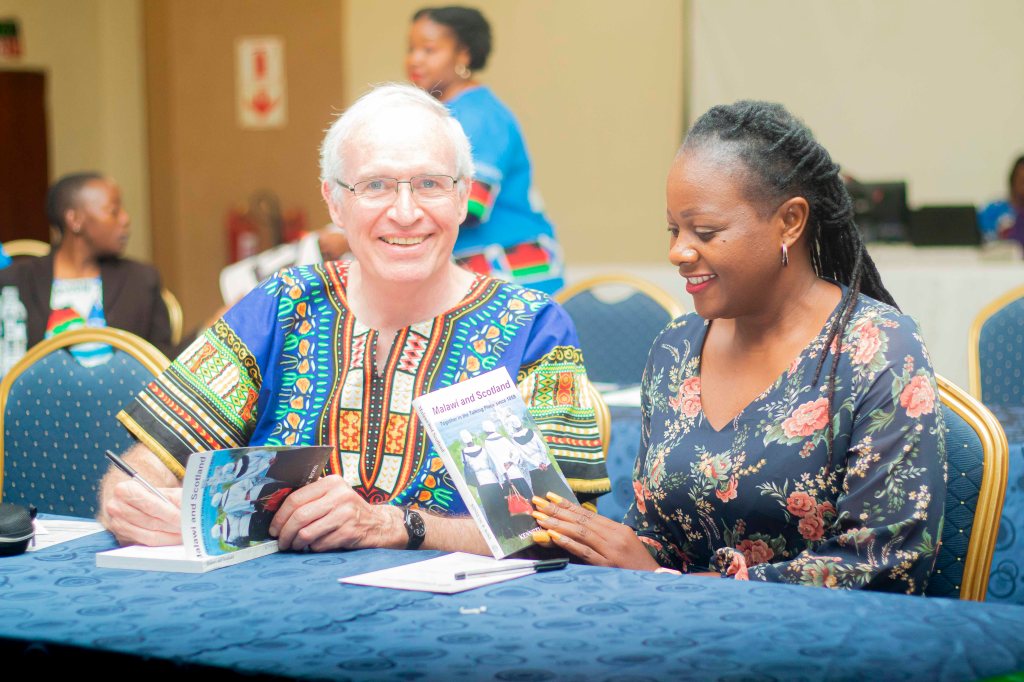
So I found myself today in a crowded hall in Lilongwe, tasked to evoke the memory of our shared ancestor. Africans have a strong sense of a continuing relationship with their ancestors, and these need not necessarily be blood relatives. Someone from outside the kinship group can be adopted as an ancestor and this is clearly what has happened to David Livingstone in Malawi.
Malawians are keenly aware that their human dignity is not something they can take for granted. The 19th century slave trade followed by 70 years of colonial rule have seen to that. But they know that Livingstone was someone who stood up for their dignity, dedicating his life to combatting the slave trade and trying to find a way for Malawians to have a fair chance of flourishing within the global economy.
That struggle continues today, which is perhaps why the memory of David Livingstone carries such resonance. It might also explain why the idea of “dignified partnership” emerged from a long series of consultations as capturing what Malawi and Scotland aim to embody today. The bright eyes of the many young people at the Livingstone event today showed that affirmation of their human dignity is still something that counts for a lot.
 Thinking Mission Blog