
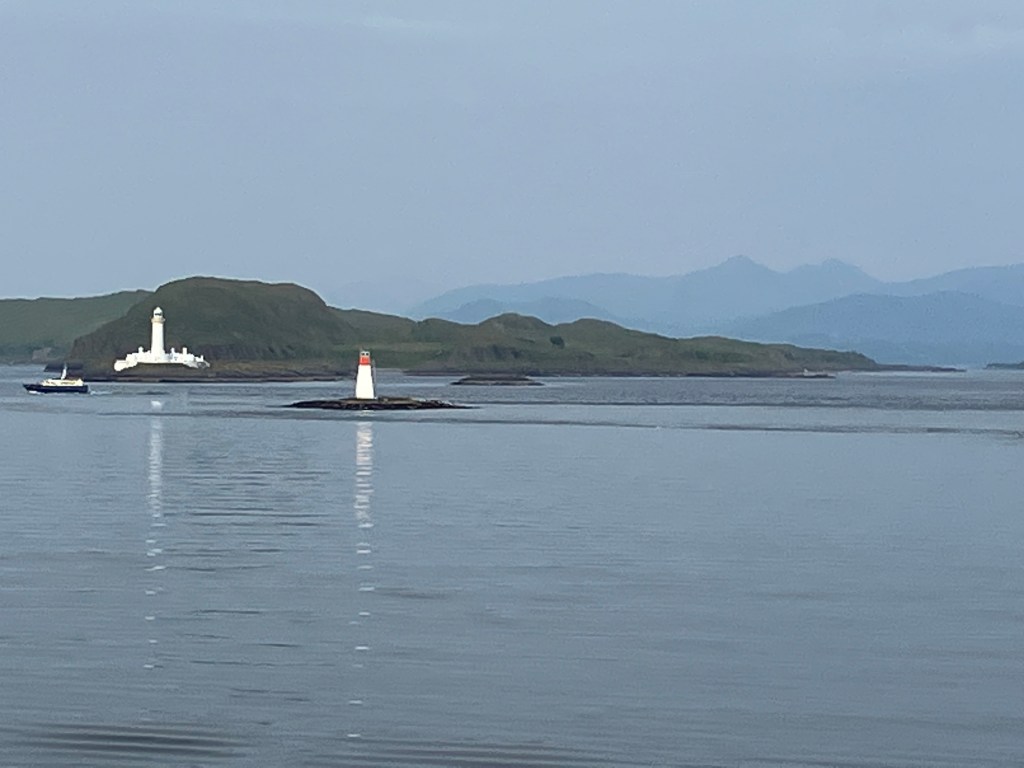
In a previous life, the Firth of Lorn on Scotland’s west coast was very familiar territory to me. Especially when the sun shines, it is a stunningly beautiful part of the world. This past weekend I had a chance to be back, this time with a new purpose – forming a living connection between Scotland and Malawi.
The Firth of Lorn witnessed an event more than two hundred years ago that, with hindsight, we can see as significant in building the relationship between the two far distant countries. This was the decision of the Livingstone family to leave their ancestral home on the Isle of Ulva and move to Blantyre in industrial Lanarkshire in search of work. It was here that David was born in 1813 and the rest, as they say, is history.
Despite this long history of interaction, and despite the interconnectedness of today’s world, there is still a lot of explaining to be done if people at either end are to understand one another. Deepening mutual understanding is something urgently needed in the world at large and an imperative in the life of the church. It means little to profess that we belong together in the body of Christ if we do not maintain meaningful connection.
So I found myself meeting various groups around the shores of the Firth of Lorn and doing my best to explain what it was like to be hit by Cyclone Freddy in March of this year. Everyone is aware of climate change and the challenge it poses for our common future. But the threat comes home in a new way when homes are destroyed and lives are lost – as happened on a large scale in Malawi (https://youtu.be/qjzF2xoTZh8 )
There is also explaining to be done on the other side, especially about the secular turn that Western society has taken and the growing marginalization of the church. The process of “dechurching” that is advancing at pace in a context like Scotland, is disconcerting for those who have the church at heart. But they do not have to walk alone. Friends in Malawi are ready to walk with them. Only they need to understand what the journey involves.
Moving between the two contrasting contexts can leave the head spinning at times but it offers the opportunity to form a bridge that has strategic value for our time.
 Thinking Mission Blog